
"Arabica climate"
6000 article(s) found

Introduction to the characteristics of Colombian coffee beans with mild climate and humid air
Colombia's mild climate, humid air, and diverse climate make it a harvest season all year round, with different kinds of coffee ripening at different times. What they grow is Arabica coffee beans of unique quality, and the coffee made from this coffee bean has a rich taste and endless aftertaste, which can be called fine coffee. Nowadays, many people combine Colombian coffee with high quality and delicious coffee.

A brief introduction to the flavor and flavor characteristics of Rwanda boutique coffee beans from Africa.
The flavor of Rwandan coffee: soft, strong, full-grained, the taste of Rwandan coffee is described as grass aroma, with tropical climate characteristics, this coffee presents a sweet fruit flavor, it also makes people taste refreshing, clear, and fresh. Bourbon coffee grown in Rwanda is amazing for its fruit sweetness and its rich and full flavor.

Introduction of coffee beans and some boutique coffee in the main producing areas of coffee beans in the world (1)
Introduction of coffee beans and some boutique coffee in the main coffee producing areas of the world: South America

History, culture, stories and allusions of high-quality coffee beans from Rwanda
Professional barista exchanges please follow the coffee workshop (Wechat official account cafe_style) Rwanda coffee boutique bean history and culture, stories and allusions the characteristics of Rwanda coffee: flavor: soft, strong, full grain Rwanda coffee taste is described as grass aroma, with tropical climate characteristics, this coffee presents the sweet taste of fruit, it can also be tasted
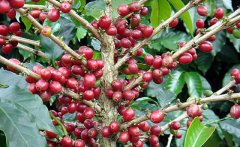
Fine coffee Arabica grows coffee beans
Arabica beans account for 70% of the world's output. The world-famous Blue Mountain Coffee and Mocha Coffee are almost all Arabica species. The other is the Robasta species, which is native to the Congo in Africa and accounts for about 20% to 30% of the world's output. Different varieties of coffee beans have different tastes, but even the same variety of coffee trees, due to different

Flavor, characteristics, taste and manor introduction of Rwandan coffee with tropical climate characteristics
Since the 1920s, Arabica coffee grown in Rwanda has been famous for its unique fruit sweetness and rich grass aroma. In recent years, the Rwandan government has taken positive measures to vigorously promote coffee production, set up coffee production cooperatives in various places, and give technical guidance and financial support to farmers, so that coffee production has made considerable progress. University of Rwanda

High-quality coffee from Rwanda comes from washed Arabica beans, which has a unique and perfect
Boutique coffee (specialty coffee) is also called specialty coffee selection coffee. It refers to coffee made from a small number of raw beans with excellent taste grown in an ideal geographical environment. Depending on the special soil and climatic conditions in which they grow, they have outstanding flavor. After strict selection and classification, this kind of coffee is hard in texture, rich in taste and stylish.

Grading, Price, Raw Bean and Baking Curve of Rwandan Coffee
Exchange of professional baristas Please pay attention to the coffee workshop (Wechat official account cafe_style) Rwanda coffee individual bean grading, price, raw beans and roasting curve suggested roasting method: deep roasting ★★: market for good Rwandan coffee: Rwanda (Rwanda) coffee is absolutely high quality in the form of washed Arabica beans. As far as Africa is concerned, its coffee industry is attractive

The difference between Arabica beans and Robusta beans 11 differences between Arabica and Robusta
What's the difference between the two heavyweights in the coffee world? Let's make a comparison between Arabica coffee and Robusta coffee. Arabica coffee, which originated in the highlands of southwestern Ethiopia, is the most popular coffee species in the world, accounting for 60% or more of the world's coffee production. Second only to Arabica coffee is Robusta coffee, which is made of coffee bean plants.

Main species of coffee trees: Arabica species
The first is Arabica beans, which account for 70% of the world's output. The world-famous Blue Mountain Coffee and Mocha Coffee are almost all Arabica. The other is the Robasta species, which is native to the Congo in Africa and accounts for about 20% to 30% of the world's output. Different varieties of coffee beans have different tastes, but even the same varieties of coffee trees

What's the difference between Arabica and Robusta coffee?
Arabica coffee has a varied and broad potential flavor. Arabica coffee produced in different regions, different elevations and different climates usually has its own characteristics and can show a completely different flavor. "Arabica" coffee smells like grass when it is not roasted. After proper roasting, it shows a "fruity" aroma.

What is the difference between coffee beans from different climates and altitudes?
The main producing areas are Java, Sulawesi and Sumatra, 90% of which are Robusta species. Indonesia's archipelago is the world's largest Robusta bean producing area. Java and Sumatra are the most famous. Another article about how growers choose coffee varieties

What are the smaller coffee beans? is it sweetened to drink coffee?
1. Arabica grows Arabica beans, and the world-famous Blue Mountain Coffee and Mocha Coffee are almost all Arabica varieties. Shape: the shape of the bean is small, the front is long oval, the middle crack is narrow and tortuous, and the arc on the back of the bean is flat, uniform in size and shiny in color. Origin: Arabica coffee is grown in Brazil, Colombia and Central America in South America.
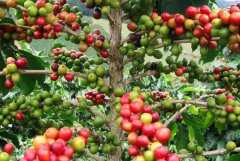
Do you know anything about Arabica's fine beans?
Arabica beans account for 70% of the world's output. The world-famous Blue Mountain Coffee and Mocha Coffee are almost all Arabica species. The other is the Robasta species, which is native to the Congo in Africa and accounts for about 20% to 30% of the world's output. Different varieties of coffee beans have different tastes, but even the same variety of coffee trees, due to different

Arabica Coffee Flavor description treatment Variety producing area characteristic Manor introduction
Arabica? Coffee has a varied and broad potential flavor. Arabica coffee produced in different regions, different elevations and different climates usually has its own characteristics and can show a completely different flavor. ? Arabica? When coffee is not roasted, it smells like grass. After proper roasting, it shows. Fruity? (medium and shallow baking) vs.

How do coffee beans grow?
Following Cafe Review (Wechat official account vdailycom) found that Beautiful Cafe opened a small shop of its own how coffee beans grow out of coffee trees originating in Ethiopia in Africa. In botany, the coffee tree belongs to the evergreen tree of the subgenus Rubiaceae, and the coffee beans, commonly known as coffee beans, are the seeds of the fruit of the coffee tree, just because they are shaped like beans.

What are the suggestions for the baking of single-product beans in Rwanda
For the exchange of professional baristas, please follow the coffee workshop (Wechat official account cafe_style) [product name]: Rwanda bourbon boutique coffee (Rwanda Bourbon Specialty) [quality rating]: AA [roasting degree]: recommended roasting degree city or deep city roasting (City Roast or Full City Roast) [grade]: good [granule]: ★★ full

What kinds of coffee trees do you have?
There are more than 6000 species of coffee trees, most of which are tropical trees and shrubs. There are four main coffee trees in the world, of which only two are of real commercial value and are planted in large quantities, and the quality of the coffee beans produced by other coffee trees is also higher than that of other coffee trees. The first is Arabica beans, which account for 70% of the world's output, the world-famous Blue Mountain.
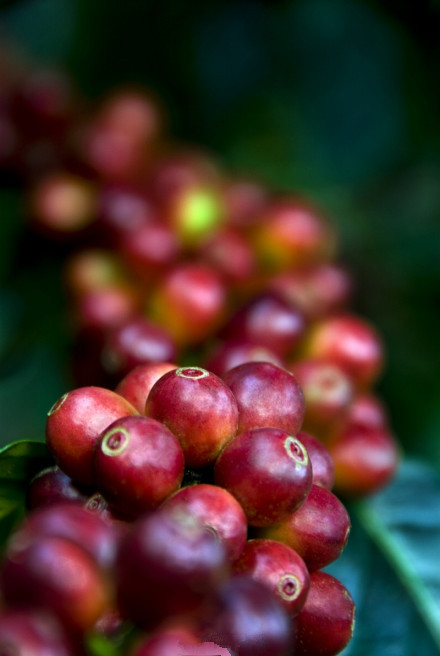
Coffee crisis with tricky tastes and fragile varieties
The price of coffee is forecast to rise by 25% by 2050. The livelihoods of 25 million people may depend on whether scientists can find a way to protect fragile coffee plants and berries. A whole year's coffee harvest may depend on the florescence of just a few days, when plants are particularly vulnerable to extreme weather. Last year, coffee leaf rust caused coffee farms in Nicaragua
Comparison of Arabica beans and Robusta beans comparison of coffee beans
It is not difficult to distinguish between Arabica beans and Robota beans. You can easily tell the difference between Arabica beans and Robota beans by their appearance. The former is slightly oval and slender, and the central line (Center Cut) is S-shaped, while the latter is round and fat, and the central line is almost straight. For a detailed comparison, please refer to the table below, where Robusta contains almost twice as much caffeine as Arabica.